Shortly after our first solo exhibition at the Museum of Applied Arts in Vienna in 2015, Elke Delugan-Meissl, the commissioner of the Austrian contribution to the 15th International Architecture Exhibition in Venice, invited us to develop an interim use concept for a refugee accommodation. Departing from the curatorial concept she developed together with Liquid Frontiers (Sabine Dreher and Christian Muhr), three teams were selected for its implementation: the two architecture offices Caramel and The Next ENTERprise and EOOS. Some time passed before the buildings for interim use were confirmed. In the meanwhile, the project team visited other emergency shelters, all of which were hopelessly overcrowded due to the ever-growing number of refugees. Given the complicated framework conditions, the task was initially challenging both on an emotional and professional level, also in the later course of the project. Our poetical analysis helped us to find our ground and an overarching vision: Thomas More’s Utopia, depicted as an island in the publication’s first edition of 1516. Our approach was utopian in the sense that we had the idea to offer the refugees meaningful work, even though this was not legally possible. Or that each room would be equipped with a fridge, empowering residents to prepare their own food and cook according to their own cultural preferences. As the refugees had so little pocket money, we thought of introducing an own currency for the house to enable trade and exchange and doing business without money. Not all, but many of our concepts could be tested and implemented on site. What emerged in the project was a unique, process-oriented and open-ended way of working, which we were able to consolidate and further develop in other social design projects.
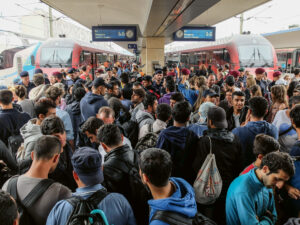
In 2015, 700,000 refugees arrived in Austria, primarily in transit to another destination country. 90,000 people, most from Syria, Afghanistan and Iraq, applied for asylum in Austria.
Haus Erdberg
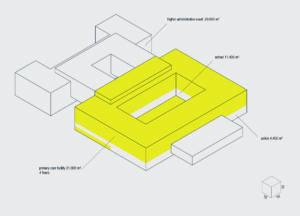
Four floors of this building were to be the first accommodation for approximately 600 refugees in Vienna, with the supervision care work shared between the welfare organizations Caritas and the Arbeiter-Samariter-Bund. Haus Erdberg was originally a training center for Austrian border police. The numerous double rooms readily available there were a great advantage compared to other mass accommodations. The downside: dark corridors and the lack of spacious rooms for communal kitchens and self-determined, meaningful activities. We set up a “field office” in one of the rooms and spent a lot of time on site studying the conditions and elaborating a concept for potential interventions. The first improvement to the infrastructure was to introduce free WLAN. As changes to the main structure of the building were not possible, we concentrated on the functionality of the furniture.
Open Design Manual
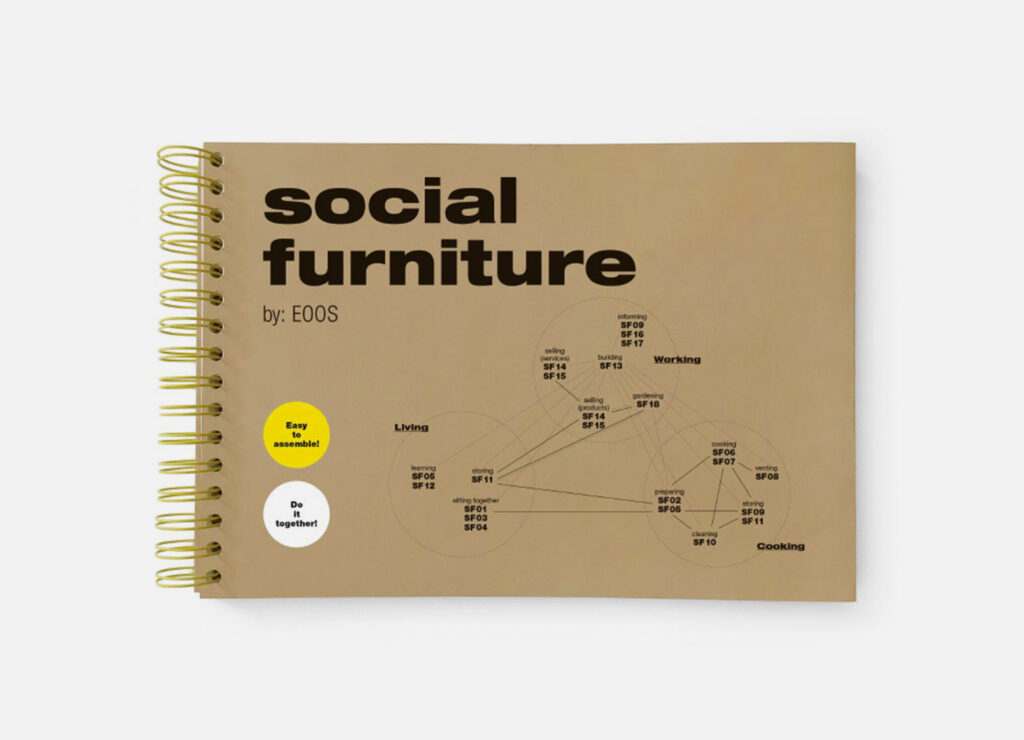
A total of 18 different furniture designs came into being for the refugee accommodation. In the wood workshop we initiated, almost a thousand furniture items were made based on detailed building instructions – each time one was finished, a colored dot was stuck on a poster. We turned the Social Furniture building instructions into a handbook, which is also available as open source material for like-minded initiatives. The publications Autoprogettazione? by Enzo Mari (1974) and Nomadic Furniture by Victor Papanek and James Hennessey (1973) served as historical precedents. Both of these projects undermined the hitherto standard design practice of protecting a design so that it can only be realized by a specific manufacturer with special skills and production resources.
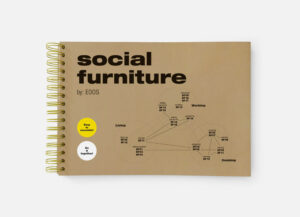
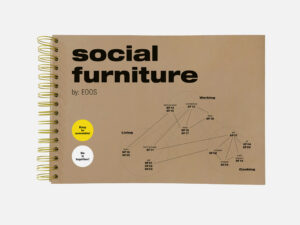
Social Furniture was published on the occasion of the Biennale of Architecture 2016.
1/4
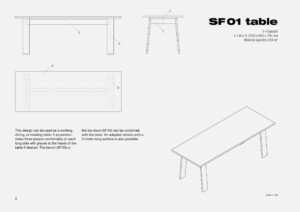
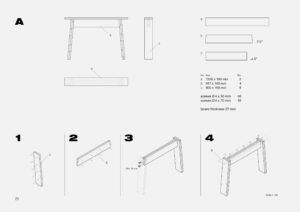
The assembly of the individual pieces of furniture is explained in a step-by-step guide.
2/4
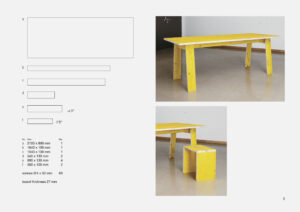
No special machines are required for the assembly. The focus was on making the build feasible with minimal tools.
3/4
4/4
Developing a Design Claim
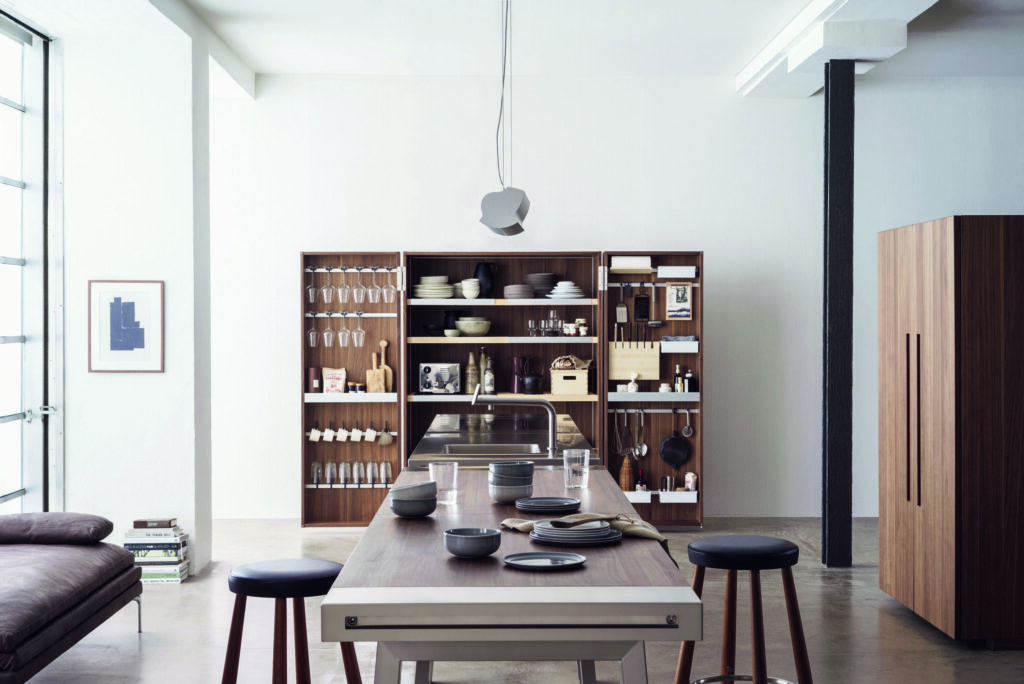
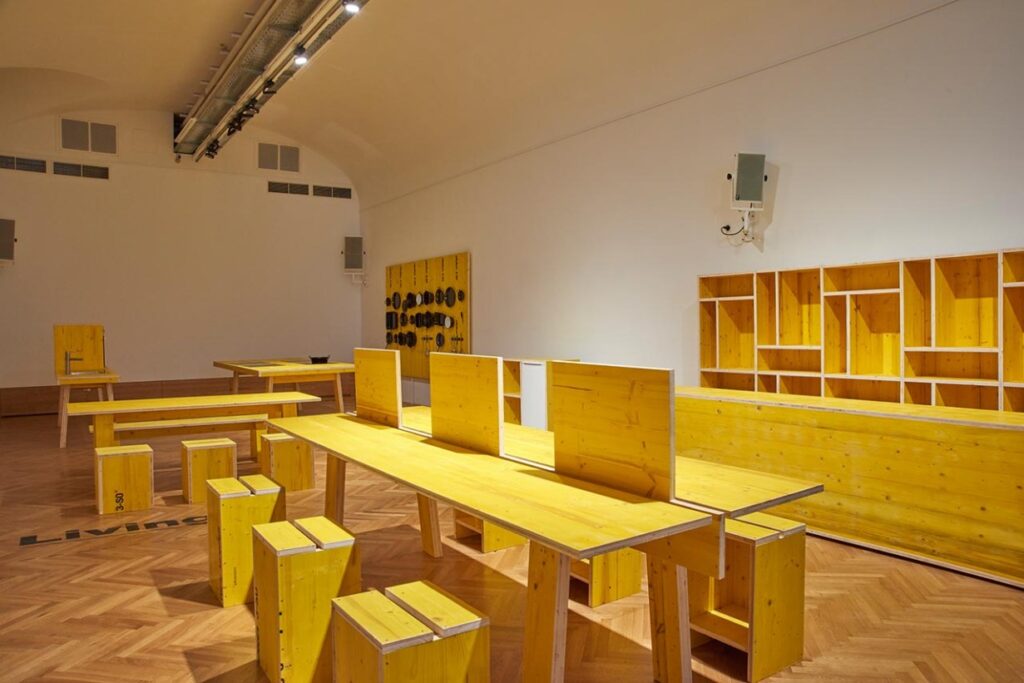
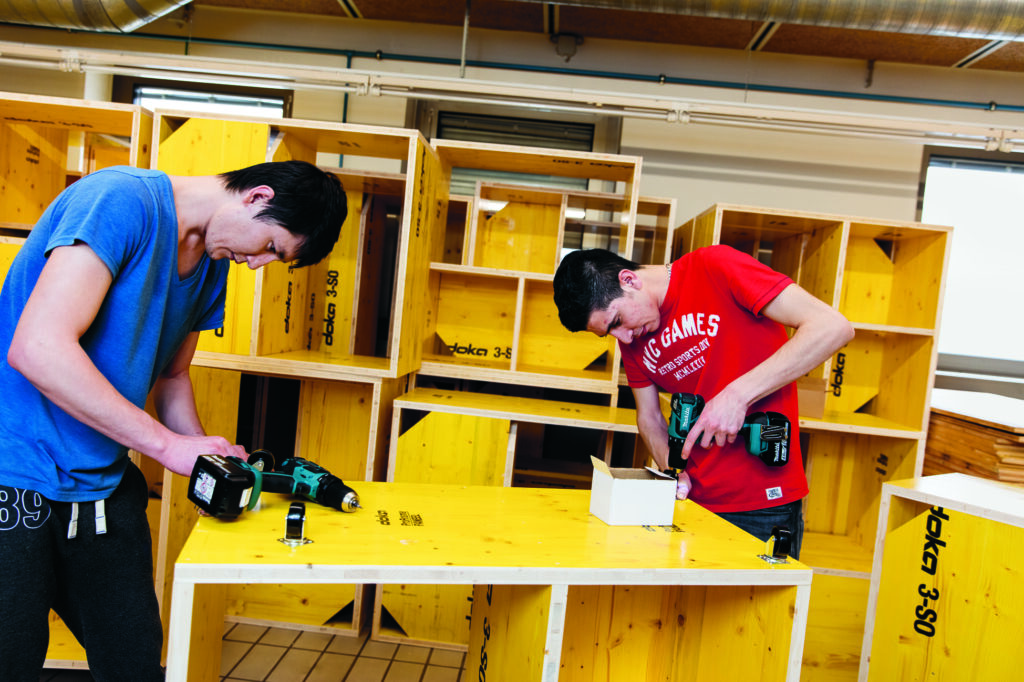
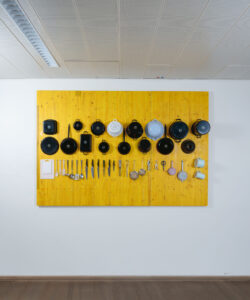
It was the first time that we applied the principle of open design. The kitchen was formally and functionally inspired by our project for Bulthaup: the workshop kitchen was scaled to be a workplace for many people, and the open tool cabinet became a wall panel for the cooking utensils. Another reference point was the Ulm Stool from 1954, an iconic design we adapted so that it could be easily assembled from yellow formwork panels. Our design practice of quickly assembling furniture from solid wood panels into 1:1 models with a cordless screwdriver evolved into a template manufacturing technology for end products. The only production tools needed for Social Furniture are a circular saw and a power drill. With this principle in mind, our design team developed simple but not banal pieces of furniture. They have the same legitimate claim to design as our commercial furniture. In this context, they enable spaces for living, cooking and working and define these three zones.
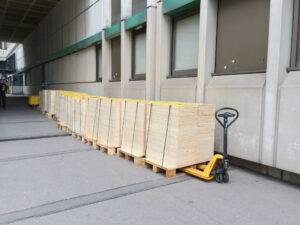
A generous donation of 20 tons of material from an Austrian formwork panel manufacturer made it possible to realize almost 1000 pieces of furniture.
1/4
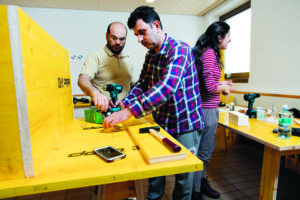
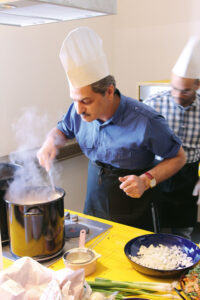
They were built together with the refugees in the “factory” we set up on the ground floor of the building.
2/4
The pictures show the making of the refrigerator furniture element (SF 11), which was the first element to be set up in the rooms so that each inhabitant could start preparing their own food.
3/4
4/4
La Biennale di Venezia
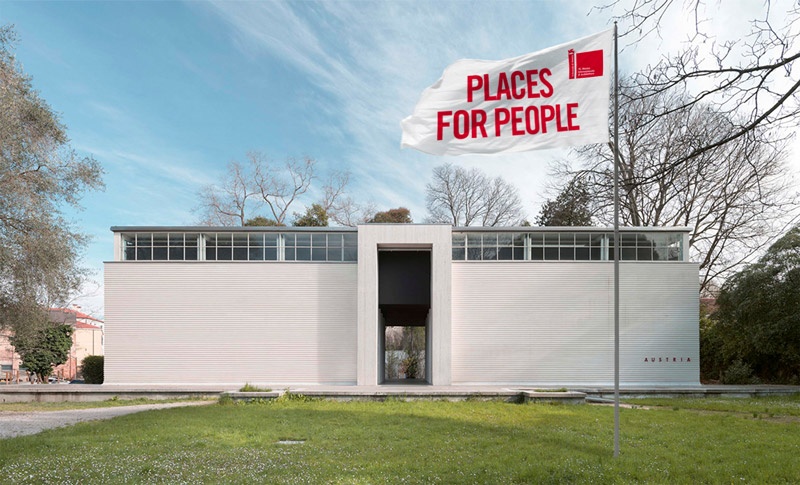
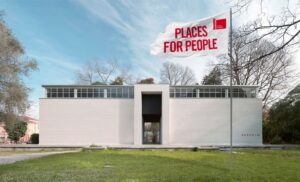
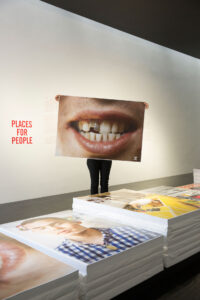
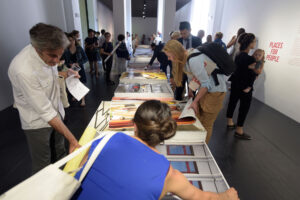
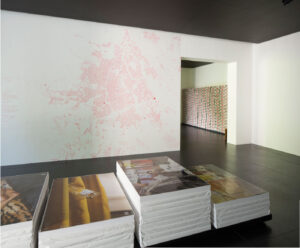
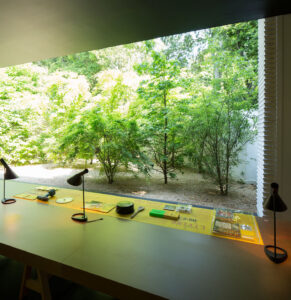
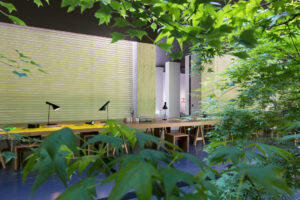
In 2016, the projects realized for refugees in Vienna by The Next ENTERprise, Caramel and EOOS were presented in the Austrian Pavilion in Venice designed by Josef Hoffmann – accompanied by a newspaper with detailed descriptions of the individual interventions as well as poster-sized photographs by Paul Kranzler that captured the atmosphere in the refugee accommodations. The presentation was Austria’s contribution to the Biennale exhibition, curated by Alejandro Aravena under the motto “Reporting from the Front.”
Related
FD 2023
b2 Workshop Kitchen
E 2016
Social Furniture
E 2016
Places for People
P 2015
Social Furniture